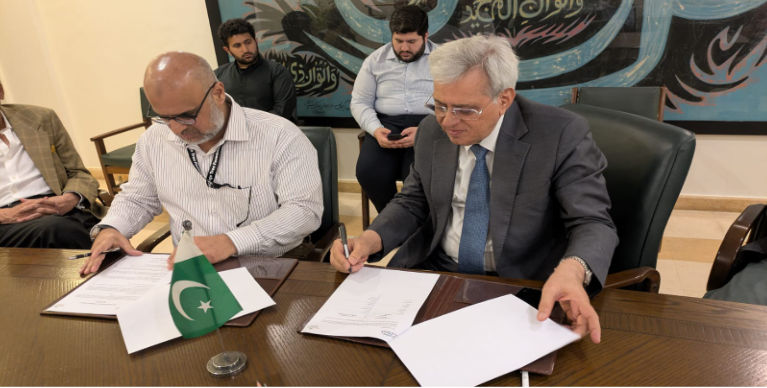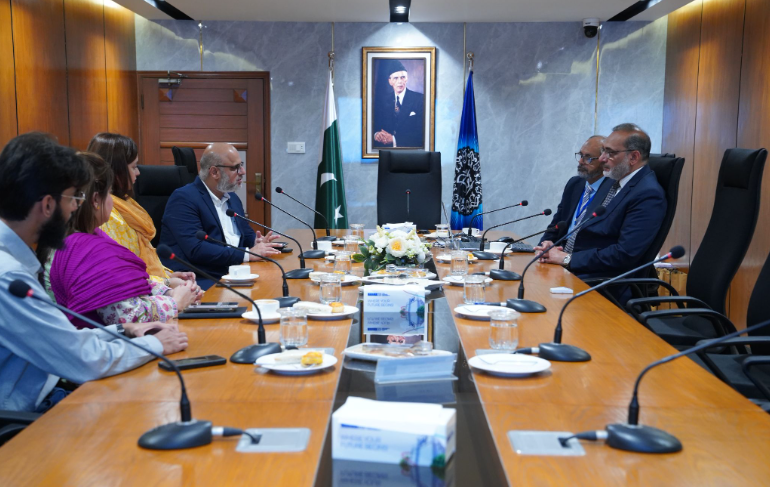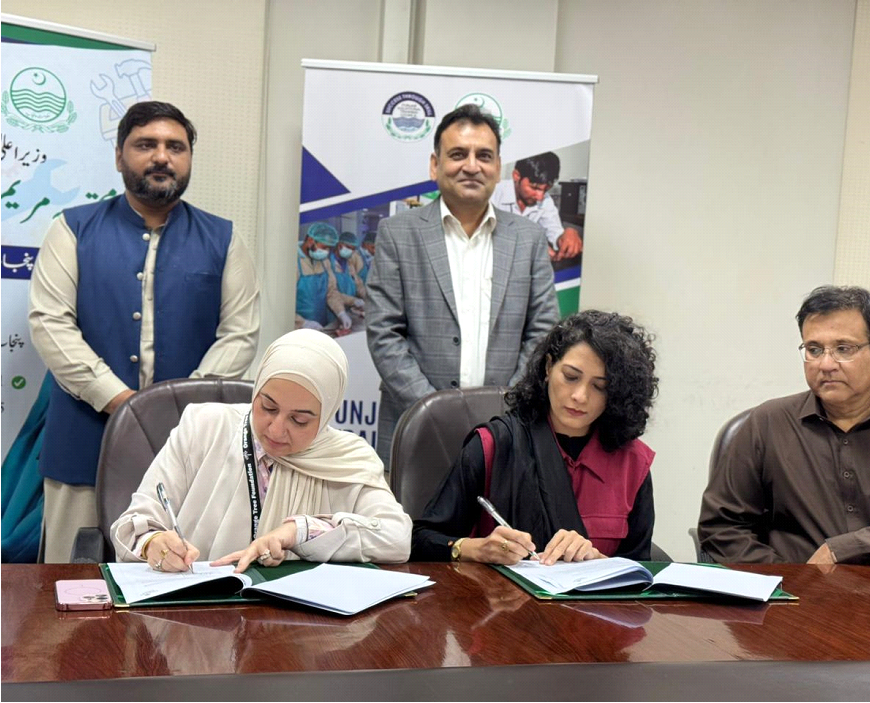
In its commitment towards a holistic approach to education and employability, The Orange Tree Foundation has signed a Memorandum of Understanding (MoU) with Punjab Vocational Training Council (PVTC) to start Maharat Vocational Training Program 2025–2026 under the Maharat Program run by OTF and sponsored by Standard Chartered Bank (SCB). The training program is aimed at underserved youth in Karachi to allow them to learn employable skills removed from any financial burden.
Punjab Vocational Training Council (PVTC) is an autonomous, non-profit corporate body established by the Government of Punjab with the mission to eradicate poverty by imparting demand-driven skill training to the youth, especially from financially disadvantaged backgrounds. PVTC operates a network of Vocational Training Institutes (VTIs) across Punjab, offering competency-based training programs that enhance employability, promote entrepreneurship, and contribute to socio-economic development.
For the duration of 6 months, Orange Tree Foundation will support up to 33 students and beneficiaries in total to be granted financial assistance to be enrolled in PVTC’s various active training programs, including Mechanical Technology, Industrial Stitching, and Electrical Technology. Financial assistance includes tuition, certification, and transportation where applicable.
Other conditions of the MoU include ensuring a minimum of 50% participation by women trainees and 10% by people with disabilities. This ensures a collective vision of inclusion across gender and abilities. Beyond just the training, the agreement also aims to secure pathways for the participants to access internship and other employment placements through industry linkages of PVTC.
This follows OTF’s particular vision regarding education and access beyond just the classroom. Various economic, social and cultural reasons add to the barriers to literacy and eventually employability. This includes not just barriers to tuition costs in general but other commute and assistance costs that hinder people who are otherwise eager to get skilled. By expanding access to financial assistance and networking opportunities, this partnership helps OTF continue on its ever-growing mission to cover all aspects that could be a hurdle to participation in education.
Widening access to education includes multiple routes, especially where diverse socio-economic backgrounds of people are concerned. Globally, support models inculcate different aspects of financial and accessibility support beyond just the immediate requirement. Covering transportation is just one part of holistically supporting those for whom multiple barriers make getting skilled even more difficult. Employability isn’t the only goal but it is part of OTF’s aim to make self-reliant communities that can support themselves through various creative and technical skills at hand.